PLEASE EXCUSE MY DELAY ON POSTING THIS JOURNAL ENTRY FOR MARCH 27, 2008
Aim: Students will assume the role of activists.
Do Now: What do you think is the meaning of the word activist, AND give an example of an activist through the works we analyzed and discussed. Use the texts to support your answer.
Response: I think that the word activist means someone who is fight for something or someone. The fighting does not necessarily have to be physical, but it could also be through written words. The reading could inspire someone to do something in favor of the activist. The online Merriam Webster Dictionary defines activist as someone who practices or emphasizes vigoruos action for political ends. From the works that we have read, Chief Joseph's Speech is considered to be a form of protest literature and is considered to be and an activist himself because he wanted equal rights for the Native Americans as well.
Make Connections: Who would you say is an activist in today’s society or historically AND Why?
Response: I would say that Al Gore is an activist because he is protesting to all the world to be aware of Global Warming and how this can affect us if we don't do anything as of now.
Sunday, March 30, 2008

Friday, March 28, 2008
Song Project Based on Treatment of Native Americans
Based on the previous history of the Native Americans in the US, we have analyzed the lyrics of the song "Imagine", by John Lennon and relate it to the unfair treatment they received by the White Men. Sumit Pal and myself, have worked on the following work you will see below.
NOTE: All the notations are in [BRACKETS] and in PURPLE FONT for each stanza.

NOTE: All the notations are in [BRACKETS] and in PURPLE FONT for each stanza.
“Imagine”, by John Lennon
Imagine there's no Heaven
It's easy if you try
No hell below us
No hell below us
Above us only sky
Imagine all the people
Living for today
[Repetition: Imagine, world
“Imagine all the people”
“I’m a dreamer”“But I’m not the only one”]
“Imagine all the people”
“I’m a dreamer”“But I’m not the only one”]
[The beginning of “The World
on the Turtle’s back”,
by Iroquois took place in the sky.]
-----------------------------------
Imagine there's no countries
It isn't hard to do
Nothing to kill or die for
And no religion too
Imagine all the people
Living life in peace
[Alliteration:
“It isn’t…”
“Living life...”]
“It isn’t…”
“Living life...”]
-----------------------------------
You may say that I'm a dreamer
You may say that I'm a dreamer
But I'm not the only one
I hope someday you'll join us
And the world will be as one
[Alliteration:
“… only one”
“…world will…”]
-----------------------------------
“… only one”
“…world will…”]
-----------------------------------
Imagine no possessions
I wonder if you can
No need for greed or hunger
A brotherhood of man
Imagine all the people
Sharing all the world
[The lines “Imagine all the people” “Sharing all the world” express Chief Joseph’s concept of sharing the Nez Perce’s land with the white men to avoid conflict.]
-----------------------------------
You may say that I'm a dreamer
But I'm not the only one
I hope someday you'll join us
And the world will live as one
[Alliteration:
“…world will…”]
“…world will…”]
[Personification:
“And the world will live as one”
The world can’t live, but humans can.]
-----------------------------------
Analysis Paragraph:
“And the world will live as one”
The world can’t live, but humans can.]
-----------------------------------
Analysis Paragraph:
-----------------------------------
Picture Analysis:

The Native Americans were a group of people who always wanted to live in peace and harmony. This picture resembles the unity that they wanted to experience. The animals in this picture could represent them, the Native Americans, because they consider the animals to be very sacred as a part of their living. As you can see in the picture, animals of different types are together in one place without fighting, which represents the unity the Native Americans wanted to have between them. The fact that there are no boundaries in the land, explains how the Native Americans wanted to live with the white men "Living all as one".
 Throughout history the Native Americans were seen as inferior people to the whites. Many tribes and groups were forced to leave their homes due to the expansion of the U.S. According to Chief Joseph the Nez Perces were a group of Native Americans which wanted to live in peace with the white men. Unfortunately the U.S. government ignored this plea to live in peace and continued their expansion. The U.S. was willing to kill the Nez Perces if they wouldn’t leave from the territory that was soon to be acquired. This picture shows a group of Native Americans who are traveling west to find a new home. The picture reflects the second stanza of this song which states that there should be “Nothing to kill or die for”, this is something that the Native Americans believed in. Without something to kill or die for the Native Americans would have kept their homes. The lines “Imagine all the people” “Living life in peace” reflect the attitude of the Native Americans towards the white men. The Native Americans wanted to live in peace so that no blood would be shed. John Lennon conveys the idea that he wants to see the world in peace so incidents like the Native Americans losing their homes and being forced to move wouldn’t happen again.
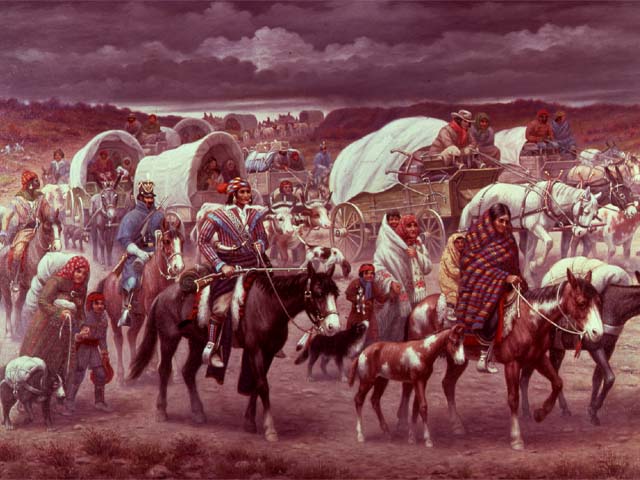 Throughout history the Native Americans were seen as inferior people to the whites. Many tribes and groups were forced to leave their homes due to the expansion of the U.S. According to Chief Joseph the Nez Perces were a group of Native Americans which wanted to live in peace with the white men. Unfortunately the U.S. government ignored this plea to live in peace and continued their expansion. The U.S. was willing to kill the Nez Perces if they wouldn’t leave from the territory that was soon to be acquired. This picture shows a group of Native Americans who are traveling west to find a new home. The picture reflects the second stanza of this song which states that there should be “Nothing to kill or die for”, this is something that the Native Americans believed in. Without something to kill or die for the Native Americans would have kept their homes. The lines “Imagine all the people” “Living life in peace” reflect the attitude of the Native Americans towards the white men. The Native Americans wanted to live in peace so that no blood would be shed. John Lennon conveys the idea that he wants to see the world in peace so incidents like the Native Americans losing their homes and being forced to move wouldn’t happen again.
Sources:
Wednesday, March 26, 2008
Journal Entry- March 26,2008
Aim: Students will better understand the literary term allusion in Joseph's speech. What is rhetoric? Students will read Chief Joseph's Speech "I will fight no more Forever"
Do Now: Read an excerpt from Chief Joseph’s speech.
Interpret the following quotes:
“The Earth is the mother of all people and all people should have equal rights upon it." (Chief Joseph).
Answer on your Blogs:
1.How is the art of rhetoric evident in Chief Joseph’s speech?
The art of rhetoric is the art of persuasive speech. Chief Joseph has the art of rhetoric, which is evident through the way he talks. During the last part of the speech we read it was clear how he was persuading the American government to see the Native Americans as common and not inferior people. If the American People do this, then they would be treated differently and thus benefit the Native Americans.
2.Who is he addressing in this speech?
In this speech Chief Joseph is addressing the American people.
3.Who is he indicting and why?
Joseph is indicting the US of forcing the Native Americans to leave their native land and pushing them to live in reservations. He surely believes that every human should have the right to live like the others, in equality.
4.Identify any heroic characteristics?
A heroic characteristic that I see in Chief Joseph is courage. It takes a lot to go up to the government and Chief Josph had the courage to stand up to someone who holds a higher postition. It was also very heroic of him to stand up for the better of the people. Most importaqntly it was heroic of him to stand up for everyone in the world as he did because he said that it did not matter from where you were from, what religion you practiced because we are all from 'Mother Earth' wanting to have the same equall rights.
5.Why is this speech Protest Literature?
This is a form of Protest Literature because Chief Joseph is protesting for equal rights for the Native Americans among the Americans. He said that he wants equality for him and his people. Protest Literature protest something and that was evident with the speech we read because he wants a fair treatment.
Do Now: Read an excerpt from Chief Joseph’s speech.
Interpret the following quotes:
“The Earth is the mother of all people and all people should have equal rights upon it." (Chief Joseph).
Answer on your Blogs:
1.How is the art of rhetoric evident in Chief Joseph’s speech?
The art of rhetoric is the art of persuasive speech. Chief Joseph has the art of rhetoric, which is evident through the way he talks. During the last part of the speech we read it was clear how he was persuading the American government to see the Native Americans as common and not inferior people. If the American People do this, then they would be treated differently and thus benefit the Native Americans.
2.Who is he addressing in this speech?
In this speech Chief Joseph is addressing the American people.
3.Who is he indicting and why?
Joseph is indicting the US of forcing the Native Americans to leave their native land and pushing them to live in reservations. He surely believes that every human should have the right to live like the others, in equality.
4.Identify any heroic characteristics?
A heroic characteristic that I see in Chief Joseph is courage. It takes a lot to go up to the government and Chief Josph had the courage to stand up to someone who holds a higher postition. It was also very heroic of him to stand up for the better of the people. Most importaqntly it was heroic of him to stand up for everyone in the world as he did because he said that it did not matter from where you were from, what religion you practiced because we are all from 'Mother Earth' wanting to have the same equall rights.
5.Why is this speech Protest Literature?
This is a form of Protest Literature because Chief Joseph is protesting for equal rights for the Native Americans among the Americans. He said that he wants equality for him and his people. Protest Literature protest something and that was evident with the speech we read because he wants a fair treatment.
Journal Entry-March 24-25, 2008
Aim: Ms. Hyde will be out today, but left instructions as follows:
Students will complete watching the Television series Part I of Into The West
Do Now: Compare and contrast what we’ve learned about Native Americans to the movie.
Response: During the last few days we have been watching the television series Into the West, and we have found it it very similar to Cheyenne's Revenge. In Cheyenne's Revenge, the Native Americans were good people who always wanted to maintain peace with there neighbors. In temrs of sharing the land, they were always willing to do so, even with the white men. The Natives would also, usually, trade with the white men the furs they had for any weapons they had. In the movie Into the West, there was a similar situation where you could see how the Native Americans were friendly people, always willing to share the land they possessed. In other occasions, the Native Americans would trade with the white men. Sadly, this did not remain like this because what was once a peaceful, would turn into a horrible disaster for both the Native Americans and the white men. A genocide took place where there was really almost no survivor. Mythological creatures were in both the television series and in the account. Loved by the Buffalo and Lone Wolf, possessed a mythological power of being able foreshadow the tragedy that would soon avenge them. The tragic outcome of these would soon show the people the unfair treatment of the Native Americans. Even though they took place at different time periods and at different places, they both conveyed the same message to the people.
Students will complete watching the Television series Part I of Into The West
Do Now: Compare and contrast what we’ve learned about Native Americans to the movie.
Response: During the last few days we have been watching the television series Into the West, and we have found it it very similar to Cheyenne's Revenge. In Cheyenne's Revenge, the Native Americans were good people who always wanted to maintain peace with there neighbors. In temrs of sharing the land, they were always willing to do so, even with the white men. The Natives would also, usually, trade with the white men the furs they had for any weapons they had. In the movie Into the West, there was a similar situation where you could see how the Native Americans were friendly people, always willing to share the land they possessed. In other occasions, the Native Americans would trade with the white men. Sadly, this did not remain like this because what was once a peaceful, would turn into a horrible disaster for both the Native Americans and the white men. A genocide took place where there was really almost no survivor. Mythological creatures were in both the television series and in the account. Loved by the Buffalo and Lone Wolf, possessed a mythological power of being able foreshadow the tragedy that would soon avenge them. The tragic outcome of these would soon show the people the unfair treatment of the Native Americans. Even though they took place at different time periods and at different places, they both conveyed the same message to the people.
Saturday, March 15, 2008
Vocabulary Words for test on Monday
Vocabulary Words For Quiz on Monday:
1. Symbolism- something that represents something/idea larger than itself.
2. Imagery- the use of vivid or figurative language to represent objects, actions, or ideas.
3. Plot- sequence of events.
4. Characters- a person portrayed in an artistic piece, such as a drama or novel.
5. Setting- time and place.
6. Conflicts- A psychic/mental struggle, often unconscious, resulting from the opposition or simultaneous functioning of mutually exclusive impulses, desires, or tendencies.
7. Point of View- the position of the narrator in relation to the story, as indicated by the narrator's outlook from which the events are depicted and by the attitude toward the characters.
8. Genre- of or pertaining to a distinctive literary type.
9. pestilential- morally harmfull; Deadly.
10. avarice- excessive desire for wealth or gain; greed for riches
11. inhabitants- one that occupies a partitcular place regularly, routinely, or for a period of time.
12. apprehension- the act or power of perceiving or comprehending.
13. clamour- a loud uproar, as from a crowd of people.
14. Dense- thick
15. Fatigue-tiredness; weariness from bodily or mental exertion; a cause of weariness; slow ordeal; exertion: the fatigue of driving for many hours
16. Ardent- fiery; zealous
17. Peril- danger
18. Morality- agreement of rules of right conduct
19. Loathsome- arousing intense dislike and disgust
20. Copious- plentiful; abundant
21. Improvident- shortsighted; failing to provide for the future
22. Apprehensions- feeling of anxiety or fear that something bad or unpleasant will happen; ; taking of a criminal into custody, the power or ability to grasp the importance, significance or meaning of something
23. procured- to obtain something, especially by effort, to provide somebody for prostitution
24. dejected- feeling or showing sadness and lack of hope, especially because of disappointment
25. accursed- enduring the effects of a curse; horrible or hateful
26. quadrant- a 90 degree arc representing one fourth of the circumference of a circle. The area bounded by a quadrant and the two perpendicular lines that connect it to the center of the circle.
27. Kindred- close to somebody or something else because of similar qualities or interests. Related to somebody by blood. (n) closeness to somebody not related to you by blood based, e.g. on similarity of character or interest. Relationship by blood, or less strictly by marriage
28. Trudge- to walk, esp. laboriously or wearily: to trudge up a long flight of steps.
29. Floundering- To make clumsy attempts to move or regain one's balance
30. Ecstasy- an overpowering emotion or exaltation; a state of sudden, intense feeling
31. Writhing- to twist the body about, or squirm, as in pain, violent effort, etc.
32. Cud- the portion of food that a ruminant returns from the first stomach to the mouth to chew a second time
33. Vile- repulsive or disgusting, as to the senses or feelings: a vile odor
34. Zest- hearty enjoyment
35. Ardent- having, expressive of, or characterized by intense feeling; passionate; fervent: an ardent vow; ardent love. Intense devotion.
36. Peril- exposure to the risk of being injured, destroyed, or lost
37. Gape- to stare with open mouth, as in wonder
38. Ammunition- the material fired, scattered, dropped, or detonated from any weapon, as bombs or rockets, and esp. shot, shrapnel, bullets, or shells fired by guns
39. Repellent- something that repels, as a substance that keeps away insects
40. Platoon- a military unit consisting of two or more squads or sections and a headquarters
41. My Khe- place in Vietnam
42. Rhetoric- The art or study of using language effectively and persuasively.
43. Chicano- a Mexican-American.
44. Aztlan- The American Southwest, specifically the territory of northern Mexico ceded to the United States by the Treaty of Guadalupe Hidalgo in 1848. The term is used especially by Chicano-rights activists.
45. Metiza [Spanish]- a woman of mixed racial ancestry, especially one of mixed European and Native American ancestry.
46. Diaspora- a migration or scattering of a group of people
47. Jibara [Spanish]- a girl or woman of rural Puerto Rico, female peasant
48. Shtetl- one of the small Jewish communities formerly found in Eastern Europe.
49. Forbears- ancestors (a variant spelling of forebears).
50. Mija, negra, ne [Spanish]- affectionate terms for girls or women.
51. Caribena [Spanish]- a girl or woman of the Caribbean islands.
52. Boricua [Spanish]- Puerto Rican
53. Taino- A member of an Arawak people of the Greater Antilles and the Bahamas who became extinct under Spanish colonization during the 16th century.
54. Bi-Lingual- using or able to use two languages especially with equal fluency
55. Bi-cultural- of, relating to, or including two distinct cultures
56. Exotic- strikingly, excitingly, or mysteriously different or unusual. introduced from another country : not native to the place where found
57. Inferior- of low or lower degree or rank
58. Alien- belonging or relating to another person, place, or thing : strange b: relating, belonging, or owing allegiance to another country or government : foreign c: exotic 12: differing in nature or character typically to the point of incompatibility
59. Token- an outward sign or expression
60. Bi-lateral- having two sides. affecting reciprocally two nations or parties
61. Gringo- a foreigner in Spain or Latin America especially when of English or American origin; broadly : a non-Hispanic person
62. Paradox- a statement that is seemingly contradictory or opposed to common sense and yet is perhaps true
63. Neurosis- a mental and emotional disorder that affects only part of the personality, is accompanied by a less distorted perception of reality than in a psychosis, does not result in disturbance of the use of language, and is accompanied by various physical, physiological, and mental disturbances (as visceral symptoms, anxieties, or phobias)
64. Sterilization- to make sterile: as a: to cause (land) to become unfruitful b (1): to deprive of the power of reproducing (2): to make incapable of germination c: to make powerless or useless usually by restraining from a normal function, relation, or participation
65. Vanquished- to gain mastery over (an emotion, passion, or temptation) to overcome in battle : subdue completely 2 : to defeat in a conflict or contest
66. Moors-followers of the religion of Islam who conquered Spain during the 700s and who lost most of their territory by the late 1200s
67. Barrios- a Spanish-speaking quarter or neighborhood in a city or town in the United States especially in the Southwest
68. Bigotry- a person obstinately or intolerantly devoted to his or her own opinions and prejudices; especially, one who regards or treats the members of a group (as a racial or ethnic group) with hatred and intolerance
69. Dejection- lowness of spirits
70. Exploitation- to make use of meanly or unfairly for one's own advantage ;exploiting migrant farm workers
71. Fierce- violently hostile or aggressive in temperament b: given to fighting or killing marked by unrestrained zeal or vehemence
72. Mariachi- a Mexican street band; also, a musician belonging to such a band
73. Barren- not reproducing: as a: incapable of producing offspring —used especially of females or matings b: not yet or not recently pregnant c: habitually failing to fruit 2: not productive: as a: producing little or no vegetation
1. Symbolism- something that represents something/idea larger than itself.
2. Imagery- the use of vivid or figurative language to represent objects, actions, or ideas.
3. Plot- sequence of events.
4. Characters- a person portrayed in an artistic piece, such as a drama or novel.
5. Setting- time and place.
6. Conflicts- A psychic/mental struggle, often unconscious, resulting from the opposition or simultaneous functioning of mutually exclusive impulses, desires, or tendencies.
7. Point of View- the position of the narrator in relation to the story, as indicated by the narrator's outlook from which the events are depicted and by the attitude toward the characters.
8. Genre- of or pertaining to a distinctive literary type.
9. pestilential- morally harmfull; Deadly.
10. avarice- excessive desire for wealth or gain; greed for riches
11. inhabitants- one that occupies a partitcular place regularly, routinely, or for a period of time.
12. apprehension- the act or power of perceiving or comprehending.
13. clamour- a loud uproar, as from a crowd of people.
14. Dense- thick
15. Fatigue-tiredness; weariness from bodily or mental exertion; a cause of weariness; slow ordeal; exertion: the fatigue of driving for many hours
16. Ardent- fiery; zealous
17. Peril- danger
18. Morality- agreement of rules of right conduct
19. Loathsome- arousing intense dislike and disgust
20. Copious- plentiful; abundant
21. Improvident- shortsighted; failing to provide for the future
22. Apprehensions- feeling of anxiety or fear that something bad or unpleasant will happen; ; taking of a criminal into custody, the power or ability to grasp the importance, significance or meaning of something
23. procured- to obtain something, especially by effort, to provide somebody for prostitution
24. dejected- feeling or showing sadness and lack of hope, especially because of disappointment
25. accursed- enduring the effects of a curse; horrible or hateful
26. quadrant- a 90 degree arc representing one fourth of the circumference of a circle. The area bounded by a quadrant and the two perpendicular lines that connect it to the center of the circle.
27. Kindred- close to somebody or something else because of similar qualities or interests. Related to somebody by blood. (n) closeness to somebody not related to you by blood based, e.g. on similarity of character or interest. Relationship by blood, or less strictly by marriage
28. Trudge- to walk, esp. laboriously or wearily: to trudge up a long flight of steps.
29. Floundering- To make clumsy attempts to move or regain one's balance
30. Ecstasy- an overpowering emotion or exaltation; a state of sudden, intense feeling
31. Writhing- to twist the body about, or squirm, as in pain, violent effort, etc.
32. Cud- the portion of food that a ruminant returns from the first stomach to the mouth to chew a second time
33. Vile- repulsive or disgusting, as to the senses or feelings: a vile odor
34. Zest- hearty enjoyment
35. Ardent- having, expressive of, or characterized by intense feeling; passionate; fervent: an ardent vow; ardent love. Intense devotion.
36. Peril- exposure to the risk of being injured, destroyed, or lost
37. Gape- to stare with open mouth, as in wonder
38. Ammunition- the material fired, scattered, dropped, or detonated from any weapon, as bombs or rockets, and esp. shot, shrapnel, bullets, or shells fired by guns
39. Repellent- something that repels, as a substance that keeps away insects
40. Platoon- a military unit consisting of two or more squads or sections and a headquarters
41. My Khe- place in Vietnam
42. Rhetoric- The art or study of using language effectively and persuasively.
43. Chicano- a Mexican-American.
44. Aztlan- The American Southwest, specifically the territory of northern Mexico ceded to the United States by the Treaty of Guadalupe Hidalgo in 1848. The term is used especially by Chicano-rights activists.
45. Metiza [Spanish]- a woman of mixed racial ancestry, especially one of mixed European and Native American ancestry.
46. Diaspora- a migration or scattering of a group of people
47. Jibara [Spanish]- a girl or woman of rural Puerto Rico, female peasant
48. Shtetl- one of the small Jewish communities formerly found in Eastern Europe.
49. Forbears- ancestors (a variant spelling of forebears).
50. Mija, negra, ne [Spanish]- affectionate terms for girls or women.
51. Caribena [Spanish]- a girl or woman of the Caribbean islands.
52. Boricua [Spanish]- Puerto Rican
53. Taino- A member of an Arawak people of the Greater Antilles and the Bahamas who became extinct under Spanish colonization during the 16th century.
54. Bi-Lingual- using or able to use two languages especially with equal fluency
55. Bi-cultural- of, relating to, or including two distinct cultures
56. Exotic- strikingly, excitingly, or mysteriously different or unusual. introduced from another country : not native to the place where found
57. Inferior- of low or lower degree or rank
58. Alien- belonging or relating to another person, place, or thing : strange b: relating, belonging, or owing allegiance to another country or government : foreign c: exotic 12: differing in nature or character typically to the point of incompatibility
59. Token- an outward sign or expression
60. Bi-lateral- having two sides. affecting reciprocally two nations or parties
61. Gringo- a foreigner in Spain or Latin America especially when of English or American origin; broadly : a non-Hispanic person
62. Paradox- a statement that is seemingly contradictory or opposed to common sense and yet is perhaps true
63. Neurosis- a mental and emotional disorder that affects only part of the personality, is accompanied by a less distorted perception of reality than in a psychosis, does not result in disturbance of the use of language, and is accompanied by various physical, physiological, and mental disturbances (as visceral symptoms, anxieties, or phobias)
64. Sterilization- to make sterile: as a: to cause (land) to become unfruitful b (1): to deprive of the power of reproducing
65. Vanquished- to gain mastery over (an emotion, passion, or temptation)
66. Moors-followers of the religion of Islam who conquered Spain during the 700s and who lost most of their territory by the late 1200s
67. Barrios- a Spanish-speaking quarter or neighborhood in a city or town in the United States especially in the Southwest
68. Bigotry- a person obstinately or intolerantly devoted to his or her own opinions and prejudices; especially, one who regards or treats the members of a group (as a racial or ethnic group) with hatred and intolerance
69. Dejection- lowness of spirits
70. Exploitation- to make use of meanly or unfairly for one's own advantage ;exploiting migrant farm workers
71. Fierce- violently hostile or aggressive in temperament b: given to fighting or killing marked by unrestrained zeal or vehemence
72. Mariachi- a Mexican street band; also, a musician belonging to such a band
73. Barren- not reproducing: as a: incapable of producing offspring —used especially of females or matings b: not yet or not recently pregnant c: habitually failing to fruit 2: not productive: as a: producing little or no vegetation
Journal Entry-March 14, 2008
Aim: How Manifest Destiny, Cultural Imperialism, and Genocide destroyed Native American cultures and heritage.Examining Native American history and experience through literary genres.
Do Now: click on the following links to learn about the meaning of the terms:
Manifest Destiny, Cultural Imperialism, and Genocide
Comprehension check questions: Trafzar’s “Cheyenne’s Revenge”
· Can we foreshadow what will happen from the title of this excerpt?
We can defintely know that there will be revenge because the title of the excerpt is "Cheyenne Revenge".
· Who are the protagonists?
The protagonist are Lone Wolf and Tall Bear.
· Who are the antagonist?
The antagonist are the Bluecoats.
· What is the setting [time and place]?
The setting is Sand Creek, Colorado 1864.
· What is the central conflict?
The central conflict is the belief the Bluecoats of thinking that the Indians are inferior to them.
· Select One character and characterize.
Lone Wolf is heroic becuse he wanted to get revenge for what had happened to his people. Lone Wolf was also very courages to take a step up to do what he had to do. Lone Wolf was also very determined to keep on going to fight the Bluecoats, even if he didn't have the best armor
· What is the point of view?
The point of view is 3rd.
· Any symbolism?
I believe that the Lance symbolizes the defense the Natives had to continue on in the battle to seek revenge.
Critical thinking Questions:
1. How are Manifest Destiny, Cultural Imperialism, and Genocide evident in this excerpt?
The Americans thought that they had the divne right to expand to the west. By expanding to the west, they also expresses cultural imperialism because they wanted the Indians to accustom to their new religious ideas. But at the same time it was a genocide because the Native Americans were killed without compassion.
2. How does the defeat of Lone Wolf and Tall Bear accurately characterize the Native American condition?
Their deaft showed their lack of equipment to deaft the Bluecoats. This shows how they had no power or say in almost anything.
3. What does Tall Bear’s vision quest reveal about the spiritual and natural beliefs of Native Americans as illustrated the folktales you’ve read?
This reveals that the Natives believe in any vision that they have as long as a mythological creatures are involved.
4. What does Silas Soule represent? Is his characterization real or embellished? Author’s responsibility.
Silas Solue represents and act of hope for the Native Americans, especially for Lone Wolf. This character is characterized as a dynamic character.
5. How can this story be an example as both an allusion and historical analogy? Think about the documentary that we saw. Trail of Tears, Wounded Knee etc…
This story tell about how the Native Americans came to be about after a course of time. This explains what small tribes like these Native Americans, came to be about. It also shows how badly the Natives were treated, but yet still there were some good people who were willning to help them at all cost.
Do Now: click on the following links to learn about the meaning of the terms:
Manifest Destiny, Cultural Imperialism, and Genocide
Comprehension check questions: Trafzar’s “Cheyenne’s Revenge”
· Can we foreshadow what will happen from the title of this excerpt?
We can defintely know that there will be revenge because the title of the excerpt is "Cheyenne Revenge".
· Who are the protagonists?
The protagonist are Lone Wolf and Tall Bear.
· Who are the antagonist?
The antagonist are the Bluecoats.
· What is the setting [time and place]?
The setting is Sand Creek, Colorado 1864.
· What is the central conflict?
The central conflict is the belief the Bluecoats of thinking that the Indians are inferior to them.
· Select One character and characterize.
Lone Wolf is heroic becuse he wanted to get revenge for what had happened to his people. Lone Wolf was also very courages to take a step up to do what he had to do. Lone Wolf was also very determined to keep on going to fight the Bluecoats, even if he didn't have the best armor
· What is the point of view?
The point of view is 3rd.
· Any symbolism?
I believe that the Lance symbolizes the defense the Natives had to continue on in the battle to seek revenge.
Critical thinking Questions:
1. How are Manifest Destiny, Cultural Imperialism, and Genocide evident in this excerpt?
The Americans thought that they had the divne right to expand to the west. By expanding to the west, they also expresses cultural imperialism because they wanted the Indians to accustom to their new religious ideas. But at the same time it was a genocide because the Native Americans were killed without compassion.
2. How does the defeat of Lone Wolf and Tall Bear accurately characterize the Native American condition?
Their deaft showed their lack of equipment to deaft the Bluecoats. This shows how they had no power or say in almost anything.
3. What does Tall Bear’s vision quest reveal about the spiritual and natural beliefs of Native Americans as illustrated the folktales you’ve read?
This reveals that the Natives believe in any vision that they have as long as a mythological creatures are involved.
4. What does Silas Soule represent? Is his characterization real or embellished? Author’s responsibility.
Silas Solue represents and act of hope for the Native Americans, especially for Lone Wolf. This character is characterized as a dynamic character.
5. How can this story be an example as both an allusion and historical analogy? Think about the documentary that we saw. Trail of Tears, Wounded Knee etc…
This story tell about how the Native Americans came to be about after a course of time. This explains what small tribes like these Native Americans, came to be about. It also shows how badly the Natives were treated, but yet still there were some good people who were willning to help them at all cost.
Journal Entry-March12-13, 2008
Aim: Students will use prior knowledge to understand Native American culture
Do Now: How can you connect man and nature from your researched folklores?
Share with class.
From the White Buffalo Woman, I was able to percieve that a nature is very important to Native Americans because they use nature as their source of explaination to why they are here and many other questions on life. Nature is also very imporatnt to them because they depend on it, it could be considered as their source of food. Nature itself is very important to them because it is holy because it plays an important role inreligious ceremonys. Such as when the Lakota and Sioux recieved their pipe.
Recall: from your Global studies class what is imperialism. Now recall the documentary we viewed last week together with your notes and identify any system of imperialism as it pertains to Native Americans.
Imperialism was a time in late 1800s early 1900s, when powerful nations like Great Britain annexed territories around the world for the benefit of their industrialization. When we previously watched the documentary last week, the English were practicing Imperialism because Custer played a part in pushing Native Americans to the west of the US. It was almost like a genocide to the Native Americans.
Do Now: How can you connect man and nature from your researched folklores?
Share with class.
From the White Buffalo Woman, I was able to percieve that a nature is very important to Native Americans because they use nature as their source of explaination to why they are here and many other questions on life. Nature is also very imporatnt to them because they depend on it, it could be considered as their source of food. Nature itself is very important to them because it is holy because it plays an important role inreligious ceremonys. Such as when the Lakota and Sioux recieved their pipe.
Recall: from your Global studies class what is imperialism. Now recall the documentary we viewed last week together with your notes and identify any system of imperialism as it pertains to Native Americans.
Imperialism was a time in late 1800s early 1900s, when powerful nations like Great Britain annexed territories around the world for the benefit of their industrialization. When we previously watched the documentary last week, the English were practicing Imperialism because Custer played a part in pushing Native Americans to the west of the US. It was almost like a genocide to the Native Americans.
Journal Entry-March10-11, 2008
Aim: Students will transfer their understanding of the Oral Tradition to explain their Native American Folktale.
Students will identify parallels between their folktales.Students will annotate and analyze their folktales for any literary terms.
Do Now: compare your folktale to the documentary we saw last week on Native Americans:
1. How is your folktale representative of Native Americans?
The folktale is about the Plain Tribes; Lakota and Sioux that tells about how they sacred pipie and how they are to use it in a cermonyThis is very important to the Lakota or Sioux because it is sacered to them in their ceremony.
2. Does it represent a specific Native American tribe?
This folktale represents the Lakota and Sioux, which are the Native American tribes in the Plains.
3. What is mythological about your folktale?
Something mythological about this is the White Buffalo Woman. She was 1/2 woman and 1/2 buffalo.
4. What literary terms did you identify in your folktale?
characterization-imagery on the white buffalo woman
setting-important setting, Colorado...Sand Creek.
Students will identify parallels between their folktales.Students will annotate and analyze their folktales for any literary terms.
Do Now: compare your folktale to the documentary we saw last week on Native Americans:
1. How is your folktale representative of Native Americans?
The folktale is about the Plain Tribes; Lakota and Sioux that tells about how they sacred pipie and how they are to use it in a cermonyThis is very important to the Lakota or Sioux because it is sacered to them in their ceremony.
2. Does it represent a specific Native American tribe?
This folktale represents the Lakota and Sioux, which are the Native American tribes in the Plains.
3. What is mythological about your folktale?
Something mythological about this is the White Buffalo Woman. She was 1/2 woman and 1/2 buffalo.
4. What literary terms did you identify in your folktale?
characterization-imagery on the white buffalo woman
setting-important setting, Colorado...Sand Creek.
Journal Entry-March 7, 2008
Aim: Students will transfer their understanding of Oral Tradition and Creation mythology to a Native American short story: Iroquois: “The World on the Turtle’s Back.”
Students will analyze the story for comprehension and critical thinking.Students will identify literary elements.
Do Now:
1. What is a myth? Do you know of any?
A myth is a sacred story concerning the origins of the world or how the world and the creations in it came to be in their present form. I don't really recall a myth at this time.
2. What is a Folklore? Can you recall a Folklore?
A folklore is a tradition, custom or belief of people. A tradition people have is to celebrate holidays.
3. What do you think is creation mythology?
A creation myth is a myth that probably tells about the creation of life, tribes, or animals.
Key Questions and Analysis:
How does the folklore attempt to explain Creation? Why?
It attempts to tell the story about how things started or came about.
How does it parallel to Christian-Biblical Creation? Explain similarities and differences using a Venn Diagram.
Students will analyze the story for comprehension and critical thinking.Students will identify literary elements.
Do Now:
1. What is a myth? Do you know of any?
A myth is a sacred story concerning the origins of the world or how the world and the creations in it came to be in their present form. I don't really recall a myth at this time.
2. What is a Folklore? Can you recall a Folklore?
A folklore is a tradition, custom or belief of people. A tradition people have is to celebrate holidays.
3. What do you think is creation mythology?
A creation myth is a myth that probably tells about the creation of life, tribes, or animals.
Key Questions and Analysis:
How does the folklore attempt to explain Creation? Why?
It attempts to tell the story about how things started or came about.
How does it parallel to Christian-Biblical Creation? Explain similarities and differences using a Venn Diagram.
Journal Entry-March6,2008
Aim: Introduction to “Oral Tradition” of Native American culture and imperialism and forced genocide.
Review of “spoken word” and speech in culture: importance of the oral word, purpose of the spoken word, and effects of the oral tradition.
Students will make connection to the oral tradition within their own cultures.
Students will identify superstition and Folklore in Creationism as themes:
Purpose of Creation mythology
Universality of Creation MythSimilarities of Creation Myth
Do Now: Watch a 22mins film on the history of Native Americans.
Students will take notes while watching the documentary on Native Americans.
What is an oral tradition in your family or amongst your friends?
Response: In my family, our oral traditions involve my parents telling me and my older brother stories of when they were younger. They tell us stories based on their lives as kids, the problems they faced and what they had to go through when they got married. My dad likes to tell us about his life when he was living with his grandmother.
Review of “spoken word” and speech in culture: importance of the oral word, purpose of the spoken word, and effects of the oral tradition.
Students will make connection to the oral tradition within their own cultures.
Students will identify superstition and Folklore in Creationism as themes:
Purpose of Creation mythology
Universality of Creation MythSimilarities of Creation Myth
Do Now: Watch a 22mins film on the history of Native Americans.
Students will take notes while watching the documentary on Native Americans.
What is an oral tradition in your family or amongst your friends?
Response: In my family, our oral traditions involve my parents telling me and my older brother stories of when they were younger. They tell us stories based on their lives as kids, the problems they faced and what they had to go through when they got married. My dad likes to tell us about his life when he was living with his grandmother.
Journal Entry-March3-5, 2008
Aim: Students will understand the term epic poem.
Students will engage in active reading by identifying the poem’s epic characteristics
Students will make connections
Students will enhance their vocabulary
Do Now: What kind of revolution would you like to fight for and why? Explain in your journals.
Response: I don't know for what revolution I would fight for, but what I do know is that many people would or do fight for early child marriges. Others fight for civil rights and woman rights too. In Israel, for example, woman are not allowed to drive.
Classwork:
1.Read an excerpt from:
“I am Joaquin/Yo Soy Joaquin” by Rodolfo “Corky” Gonzales
2.Comprehension check:
a. According to the speaker, what struggle have his fathers won and what struggle have they lost?
According to the speaker, his father had won the economic struggle and have lost the cultural struugle. The immagrants have to work hard and only earn minimum wage.
b. What does the speaker wish for his children?
The speaker wishes his children to know who he is. he wants to leave something behind for future generations.
3.Think critically:
a.What kind of revolution do you think the speaker is calling for? Explain.
I think that the speaker ios calling for a Mexican-American civil Right Movement. He also wants others to join him in the fight towards the social an economic struggle.
b. Analyze the poem as an effort to persuade. Who do you believe is the intended audience, and what do you think the poet wants the audience to do, think, and feel?
I belive that the intended audience was the Latin American people who lived in the US during that time of the 1960's. He wants them to join him in the importance of continuing to battle for their social revolution. To recognize his culture, he must fight the social economic battle.
Teacher’s Model:
Epic Characteristics
Evidence from Poem
Hero with high ideals
Courageous deeds
Large-scale setting
Universal ideas
Share out.
Students will engage in active reading by identifying the poem’s epic characteristics
Students will make connections
Students will enhance their vocabulary
Do Now: What kind of revolution would you like to fight for and why? Explain in your journals.
Response: I don't know for what revolution I would fight for, but what I do know is that many people would or do fight for early child marriges. Others fight for civil rights and woman rights too. In Israel, for example, woman are not allowed to drive.
Classwork:
1.Read an excerpt from:
“I am Joaquin/Yo Soy Joaquin” by Rodolfo “Corky” Gonzales
2.Comprehension check:
a. According to the speaker, what struggle have his fathers won and what struggle have they lost?
According to the speaker, his father had won the economic struggle and have lost the cultural struugle. The immagrants have to work hard and only earn minimum wage.
b. What does the speaker wish for his children?
The speaker wishes his children to know who he is. he wants to leave something behind for future generations.
3.Think critically:
a.What kind of revolution do you think the speaker is calling for? Explain.
I think that the speaker ios calling for a Mexican-American civil Right Movement. He also wants others to join him in the fight towards the social an economic struggle.
b. Analyze the poem as an effort to persuade. Who do you believe is the intended audience, and what do you think the poet wants the audience to do, think, and feel?
I belive that the intended audience was the Latin American people who lived in the US during that time of the 1960's. He wants them to join him in the importance of continuing to battle for their social revolution. To recognize his culture, he must fight the social economic battle.
Teacher’s Model:
Epic Characteristics
Evidence from Poem
Hero with high ideals
Courageous deeds
Large-scale setting
Universal ideas
Share out.
Journal Entry-February 28-29, 2008
Aim: Students will synthesize information used from Morales’ “Ending Poem,” to create their own poem or autobiographical sketch.
Students will identify literary elements in the poem “Ending Poem.”
Students will make connections to the text.
Students will research the term legal alien
Do Now: Can you recall a time when you were prejudged? Give details in your journal.
Response: Yes, I do remember that there was time when I went to Mexico and not all but some people, misjudge me differently only because I was coming from the United States. They said I was American. But, when I return back home, here in the United States, people don't see me as an American but rather a Mexican. How ironic is that??? When people do that, you feel out of place...like an outcast.
Classwork:
1.Finish discuss Ending Poem and literary elements.
2.How are these poems a form of protest poetry? And what are they protesting?
Both of these poems; "Ending Poem" and "Legal Alien" are a form of protest literature to society claiming that they are not what society says that they are, but who they claim to be. They are protesting to the label that society gives them.
On “Legal Aliens”:
Read Aloud: Legal Aliens
Comprehension Check:
1. How does the poet say she is viewed by Anglos, and by Mexicans?
The Anglos don't view her as one of them because she is not 100% American. But she is also not viewed as a Mexican either.
Think Critically:
2. How do you think the poet feels about being bilingual and bicultural?
(Think about: how she is viewed by Anglos and Mexicans. Her description of herself in
lines 16-22.)
I believe that she could feel somewhat proud, but at the same time she feels somewhat dissapointed because some people misjudge her.
3. How do you interpret the title “Legal Alien?”
To me it means: Foreigner that belongs where he or she is. She is an American that is seen as an immigrant. "A foreigner in her own homeland".
4.What purpose does the hyphen serve in this poem?
The hyphen could serve as a separtion or jointment.
Cooperative Learning:...This was done in school and the work is hanging in Rm.236
Research the term “legal alien” as it pertains to immigration.
Which Latin American groups of people have the highest migration rate to the United States?
What are the pros and cons of illegal immigrants in a country? Illustrate this on a T chart.Have someone in the group draw a mask to show Bi-lingual, Bi-cultural, Bi-lateral.
Students will identify literary elements in the poem “Ending Poem.”
Students will make connections to the text.
Students will research the term legal alien
Do Now: Can you recall a time when you were prejudged? Give details in your journal.
Response: Yes, I do remember that there was time when I went to Mexico and not all but some people, misjudge me differently only because I was coming from the United States. They said I was American. But, when I return back home, here in the United States, people don't see me as an American but rather a Mexican. How ironic is that??? When people do that, you feel out of place...like an outcast.
Classwork:
1.Finish discuss Ending Poem and literary elements.
2.How are these poems a form of protest poetry? And what are they protesting?
Both of these poems; "Ending Poem" and "Legal Alien" are a form of protest literature to society claiming that they are not what society says that they are, but who they claim to be. They are protesting to the label that society gives them.
On “Legal Aliens”:
Read Aloud: Legal Aliens
Comprehension Check:
1. How does the poet say she is viewed by Anglos, and by Mexicans?
The Anglos don't view her as one of them because she is not 100% American. But she is also not viewed as a Mexican either.
Think Critically:
2. How do you think the poet feels about being bilingual and bicultural?
(Think about: how she is viewed by Anglos and Mexicans. Her description of herself in
lines 16-22.)
I believe that she could feel somewhat proud, but at the same time she feels somewhat dissapointed because some people misjudge her.
3. How do you interpret the title “Legal Alien?”
To me it means: Foreigner that belongs where he or she is. She is an American that is seen as an immigrant. "A foreigner in her own homeland".
4.What purpose does the hyphen serve in this poem?
The hyphen could serve as a separtion or jointment.
Cooperative Learning:...This was done in school and the work is hanging in Rm.236
Research the term “legal alien” as it pertains to immigration.
Which Latin American groups of people have the highest migration rate to the United States?
What are the pros and cons of illegal immigrants in a country? Illustrate this on a T chart.Have someone in the group draw a mask to show Bi-lingual, Bi-cultural, Bi-lateral.
Journal Entry-February 27, 2008
Aim: Students will analyze and understand the complexity of Puerto Rican identity through protest poetry.
Do Now: Do you consider yourself as having mixture of roots? Why or why not?
Response: I do consider myself as having a mixture of roots because I cannot say that I am from one definte place. For example, my parents from Mexico but I was not born there, I was born in the but neither can I say that I am Mexican.
Classwork:
1. What geographical regions can be identified in this poem?
Puerto Rico, the Caribbean, Afirca, Europe, California New York; Manhattan, Bronx.
2.Describe the message within the following verses:
-“History made me”-This qoute can be interpreted as if the author is trying to tell the reader how her ancestry goes back into history to different nationalities. As time passed by, her family's nationality changes until it reaches her, where she finds herself as a product of history/
-“I was born at the crossroads.”-The speaker said that she was born at the crossroads meaning that she choses what she wants to be.
3.Define Caribeña and Taíno.
Caribena [Spanish]- a girl or woman of the Caribbean islands.
Taino- A member of an Arawak people of the Greater Antilles and the Bahamas who became extinct under Spanish colonization during the 16th century.
4.How would you characterize the speaker’s racial and ethnic background?
Hispanic, Puerto Rican Jew.
“Ending Poem” introduces some of the issues that characterize the Puerto Rican identity such as:
a) Puerto Ricans consider themselves a cultural group
b) They struggle to find a place (in terms of social class) within the dominant culture in the United States.
c) Puerto Rican literature in the U.S. reveals a mixture of North American and Puerto Rican cultures, all of which at times comes to a clash.
d) Some struggle to preserve aspects of the Puerto Rican culture while trying to accept their new roles in the United States at the same time
Do Now: Do you consider yourself as having mixture of roots? Why or why not?
Response: I do consider myself as having a mixture of roots because I cannot say that I am from one definte place. For example, my parents from Mexico but I was not born there, I was born in the but neither can I say that I am Mexican.
Classwork:
1. What geographical regions can be identified in this poem?
Puerto Rico, the Caribbean, Afirca, Europe, California New York; Manhattan, Bronx.
2.Describe the message within the following verses:
-“History made me”-This qoute can be interpreted as if the author is trying to tell the reader how her ancestry goes back into history to different nationalities. As time passed by, her family's nationality changes until it reaches her, where she finds herself as a product of history/
-“I was born at the crossroads.”-The speaker said that she was born at the crossroads meaning that she choses what she wants to be.
3.Define Caribeña and Taíno.
Caribena [Spanish]- a girl or woman of the Caribbean islands.
Taino- A member of an Arawak people of the Greater Antilles and the Bahamas who became extinct under Spanish colonization during the 16th century.
4.How would you characterize the speaker’s racial and ethnic background?
Hispanic, Puerto Rican Jew.
“Ending Poem” introduces some of the issues that characterize the Puerto Rican identity such as:
a) Puerto Ricans consider themselves a cultural group
b) They struggle to find a place (in terms of social class) within the dominant culture in the United States.
c) Puerto Rican literature in the U.S. reveals a mixture of North American and Puerto Rican cultures, all of which at times comes to a clash.
d) Some struggle to preserve aspects of the Puerto Rican culture while trying to accept their new roles in the United States at the same time
Journal Entry-February 26, 2008
Aim: Students will volunteer their research findings on the Mexican American Civil Rights Movement and other historical elements of Hispanics in American during the 1960s.
Do Now: Not Aplicable...Because Students will chart their research on last night’s homework assignment and present their findings.
Share Out
Do Now: Not Aplicable...Because Students will chart their research on last night’s homework assignment and present their findings.
Share Out
Journal Entry-February 25, 2008
Theme “Protest Literature”
Aim: We will investigate and research the Chicano/Hispanic/Latino etc. culture and literature in search of protest and revolution.
Students will do research on the meaning of the words Chicano and Aztlán.
Do Now: What do you know, or have noticed, or heard to be stereotypes of Chicano/Hispanic/Latino culture?
Response: As from what I have noticed, the Chicano/Hispanic/Latino Cultutre like to have a large family. These people are very united and tend to do keep their traditions even in a foreign country. They also are very religious and eat very similar foods, but just in different forms.
Aim: We will investigate and research the Chicano/Hispanic/Latino etc. culture and literature in search of protest and revolution.
Students will do research on the meaning of the words Chicano and Aztlán.
Do Now: What do you know, or have noticed, or heard to be stereotypes of Chicano/Hispanic/Latino culture?
Response: As from what I have noticed, the Chicano/Hispanic/Latino Cultutre like to have a large family. These people are very united and tend to do keep their traditions even in a foreign country. They also are very religious and eat very similar foods, but just in different forms.
Sunday, March 2, 2008
“I Am What I Am”
Information Technology High School
Ms. Hyde
English E6
3/2/08
Lourdes Vicuna
"I Am What I Am"
By: Lourdes Vicuna and someone else
I Am What I Am
I am an immigrant of the Americas.
A child of the Lands
Coming only from one place.
Speaking Two Languages, Dos Culturas.
Living in a new world.
I am what I live
Accommodating to a new life.
With no true defined background,
But I know where my roots start.
I am one whole that is split into two pieces
And I am one of the two pieces.
Confused with life and at times speaking Spanglish
Understanding mi hija and communicating with mi hija in only one language.
At times I feel as an outsider
But there is nothing to be ashamed of.
But I am what I am,
Standing strong no matter what the people think.
Spanish or American…
It doesn’t matter what people think,
But who I really am!
A Latin American child, born into America,
Finding who she really is.
I am what I am and I am proud of it.
I have made what I see.
We are who we are and that is what makes US!
Ms. Hyde
English E6
3/2/08
Lourdes Vicuna
"I Am What I Am"
By: Lourdes Vicuna and someone else
I Am What I Am
I am an immigrant of the Americas.
A child of the Lands
Coming only from one place.
Speaking Two Languages, Dos Culturas.
Living in a new world.
I am what I live
Accommodating to a new life.
With no true defined background,
But I know where my roots start.
I am one whole that is split into two pieces
And I am one of the two pieces.
Confused with life and at times speaking Spanglish
Understanding mi hija and communicating with mi hija in only one language.
At times I feel as an outsider
But there is nothing to be ashamed of.
But I am what I am,
Standing strong no matter what the people think.
Spanish or American…
It doesn’t matter what people think,
But who I really am!
A Latin American child, born into America,
Finding who she really is.
I am what I am and I am proud of it.
I have made what I see.
We are who we are and that is what makes US!
Subscribe to:
Posts (Atom)